Saddle Caution
Practical Dove Saddles guidance and information about saddle caution.
Beware
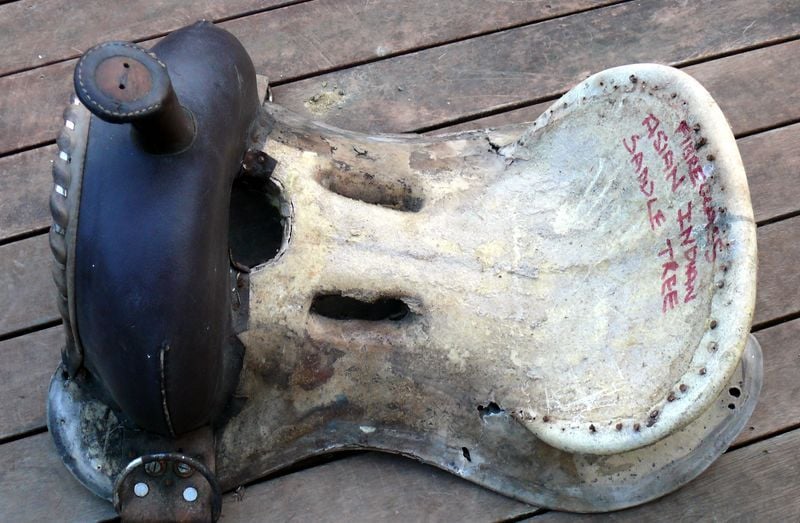
This page is for those who may be new to western saddles, and we are not just helping the new rider to be aware of a poorly made Asian western saddle; the main factor is concern for your riding safety. So please think twice before buying. Yes, there are better and worse examples of these saddles, but sadly it is not easy to tell before it is too late.
The only good thing I can say about an Asian Indian saddle is that it can get you started at a reasonable price, and if you find you do like the western style of riding, then ditch it for a better-quality saddle.
And don't always be fooled by Indian manufacturers' slick websites, as they will also post US-made saddles on theirs as if they have made them. I contacted one of these manufacturers (Blue Dive International) and asked them for the US companies they supply, only to be told, 'We respect the privacy of our clients.' Funny that, as wouldn't you be encouraging those you supply to be the best reference for your products? So we had to conclude they were only US photos on their website, and not saddles they had made. Sadly, a lot of retail saddle shops don't know what they are buying and some, I have to say, don't really care.
Top View of an Asian Indian made Saddle Tree
I have personally been offered Indian western saddles for $69 US, so who's making the money? The factory owner and the retailer, that's who. I can tell you now, it is not the Indian saddle maker, as he only gets $3-00 US per day, and a standard factory no-skill labourer may get half that, with no job security. Slavery, I hear you say. Well, as long as you pay them something, it's not slavery under international law.
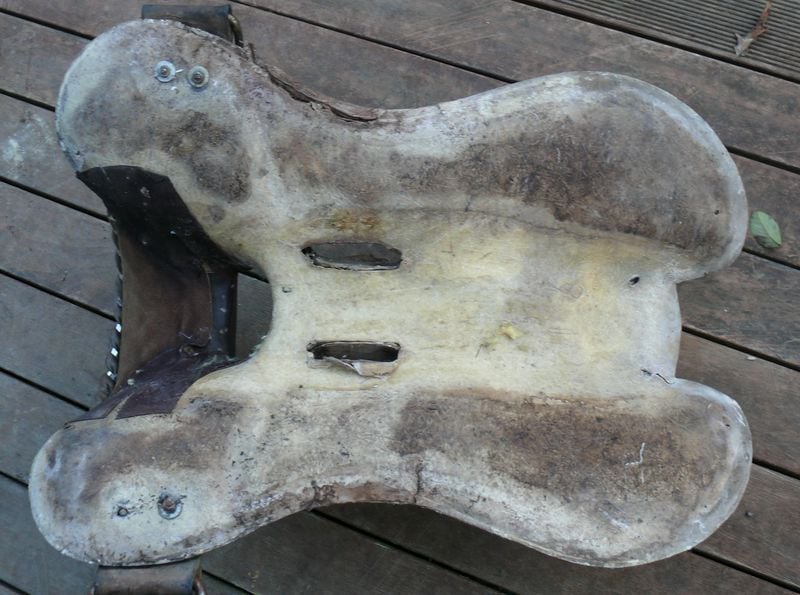
Bottom View
This tree is far too flat and wide for a standard horse's back, and will tend to inhibit the horse's spine, causing unnecessary pressure and a rolling effect.
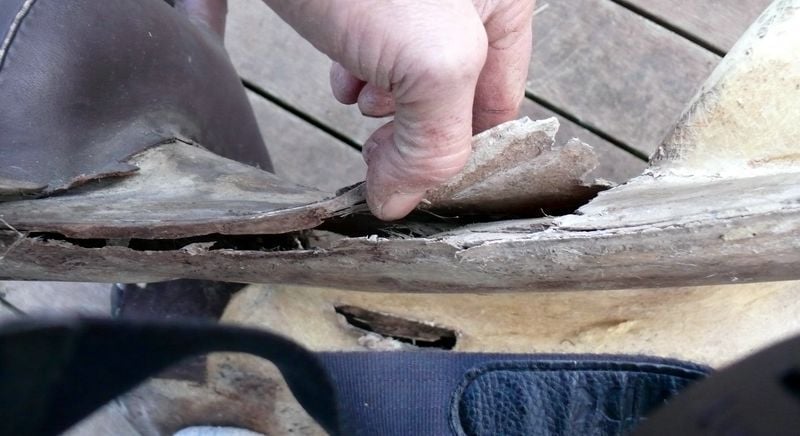
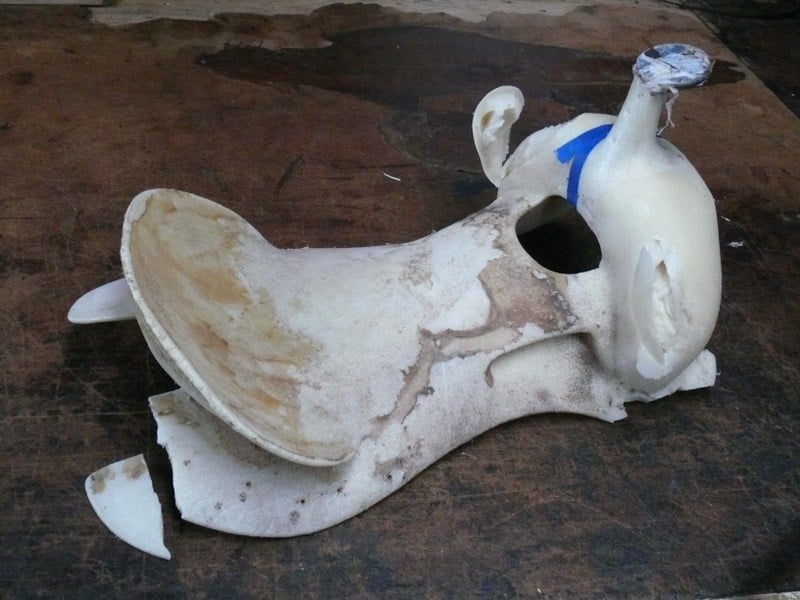
Delamination of the fibreglass tree
I have tried to put screws back into these saddles and found that, if you don't stop at exactly the right time, they will spin out (that is, if there is any thread grip left). Once that failed, I even tried pop rivets and they just pulled right through the weak fibreglass walls, so all I could do was fire staples at different angles, telling the customer that was all that could be done without costly work being involved. Sorry.
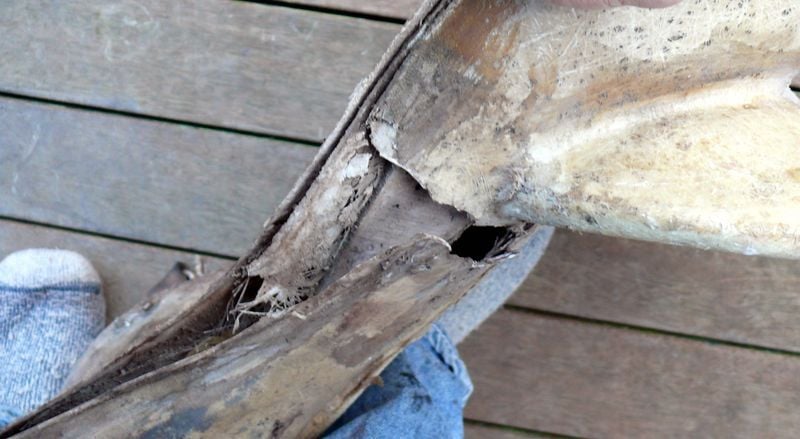
Hollow inside
So where is the strength coming from? An old saddler friend of mine used to repair these for a well-known importer of these saddles and told me that, when delamination started to take effect, he would fill them with foam-in-a-can space invader, and there was your so-called strength.
BEWARE
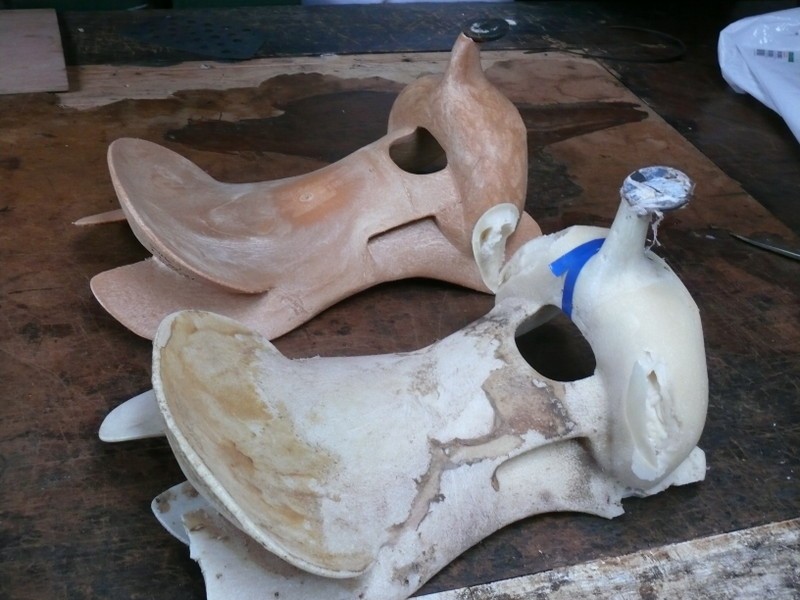
Another cheap Asian knock-off: one a genuine Ralide and the knock-off to a T, the two trees together. I don't think I need to tell you which is which.
Poor Indian KNOCK off
Just when you thought you might be getting a good tree in an Indian-made saddle, it may be just another cheap Indian knock-off: an inferior plastic that may not even be injected into the mould, but just hot-poured, whereas our Ralide trees are injected under huge pressure to form a high-tensile polyethylene plastic to cope with the pressures of today's horsemanship.